
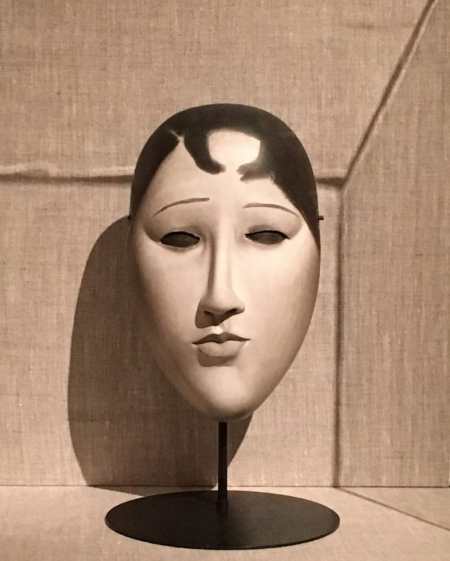
Ever since I was a little girl, I’ve had an uncanny ability to imitate other people. I could mirror what was said and done to me. I mimicked words I heard and actions I witnessed. I appeared normal, but there was a disconnect — my inside didn’t match my outside. After being around me for awhile, others would notice that my speaking, moving being didn’t have the same type of inner self as everyone else. I misunderstood, seemingly willfully, basic human communication. I knew none of the norms of social interaction. Inside this realistic shell, something essential was missing, or broken, or at best unrecognizable from what was inside everyone else.
I wasn’t like other kids my age, and they didn’t want to be around me. I lived in books, relating to every misfit I read about, who would come to some realization by the end of the novel and suddenly not be such a misfit any more. I waited for that realization to happen to me. I didn’t want to be a misfit, that odd, weird person no-one wanted to be friends with.
The realization never came.
By the time I was in high school, my peers actively disliked and avoided me. One girl said to me: “You always know how to say the exact wrong thing!” and stormed off in tears. I felt horrible, and horribly confused. Why had it been wrong? What was the right thing? I must be doing something wrong; no-one ever stayed friends with me for long. I grew stiff and shy in public.
I went to college in the early 90s when goth was still a subculture. I loved the music and dystopian outlook; they matched my negative inner monologue perfectly. They didn’t think I always said the wrong thing; they thought the world was full of hopeless fakes and that they themselves were just “being real.” Still, I was missing something. Women tried to be friends with me but I couldn’t see it. I thought they just felt sorry for me. I didn’t know what they wanted, or what they meant.
I never seemed to know what anyone meant.
It lasted a few years, but eventually those friends fell away, one by one, just like my friends always did. In my late twenties, I started working with animals as a veterinary nurse. While people were completely opaque to me, animals were an open book, so I thought work around them would help me feel more normal. It went well for a time; I was good with dogs and cats.
Unfortunately, working with animals still means working with people. Several months in, my supervisor pulled me outside. She said no-one wanted to work with me anymore. It was my attitude, she added, thinking she was being helpful. At a loss, I started to cry. What attitude? I didn’t think I was behaving any differently than anyone else. She told me to go home, pull myself together, and come back for my next shift in a couple of days.
I resolved to be better, and I was, for a few weeks, carefully curating everything I said to remain “positive.” But I couldn’t keep it up. I would get tired, my smile would disappear, and my normal behavior was off-putting. I left for another animal clinic.
And eight months later, another after that. One, I almost made it a year. The next, I didn’t last the summer. Something wasn’t working. Something about me was still wrong.
I buckled down. I had to get better at this people thing. I thought I was just lazy — other people were naturally sensitive to others, so why wasn’t I? I needed to apply myself. I started studying human behavior in new detail, and found another new group of friends, a loosely knit group of community theatre people. Examining them closely, I came to realize that people lied to each other, all the time. They pretended to be interested in other people, to be happy for them, to agree with them, even when they weren’t. They expressed sympathy for things they did not necessarily care about. They made a point of making other people around them feel good about themselves with a blatant disregard for reality.
I didn’t understand it, but I could imitate it. I did want other people to feel good about themselves around me. I became much, much better. But at a cost; it was exhausting. I couldn’t keep it up for very long, not enough for a forty hour work week, or, going back for a second bachelor’s degree, a full load of courses. But I found a job while I was at school, caring for animals in the animal research wing, where days would go by when I saw no-one at all. Just me and a few thousand mice. It was the only job I’d ever kept for more than a year. It was perfect. I loved it.
Two decades in, I had learned to assimilate. My classmates were friendly with me and enjoyed my company despite the near twenty-year age difference. It took me five years, but I graduated with honors.
Then I started a research-based graduate program. Looking back, I can see I had no business there, but it was competitive and I was flattered to have been selected even though I was not suited to it at all. The social aspect was not a problem, as graduate students are too busy to socialize. But I foundered under the deluge of work and demands.
The autonomy immobilized me. I couldn’t put an experiment together from start to finish, never mind a slate of them to test a theory. I had zero facility in the lab and was quickly outstripped by other new students who’d been working in them for years. I tried to get my student mentor to tell me what to do and he finally said, more gently than he probably wanted to, that this was graduate school and I needed to figure these things out for myself.
My classes were worse. The volume of information was many times greater than it had been in undergrad. I couldn’t learn all of the information, couldn’t figure what I was supposed to learn, and couldn’t understand what was being asked of me. My first exam came back and I had the lowest grade in the class.
I went to see the professor, who said, “I didn’t understand your exam at all. You didn’t answer the questions I asked.”
My other courses were no better and in the lab I had only produced one piece of usable data over the entire semester. Three weeks before finals, I underwent a battery of psychological tests, desperate for some explanation as to what was wrong with me.
One week later, I had a diagnosis. Autism Spectrum Disorder Level I, a high-functioning cohort of autism also called Asperger’s syndrome.
No-one has any idea whatsoever that I am a faker, a sham, a walking performance piece entitled “Socially Habituated Human.”
Up to that point, my life had been a hopeless tangle of failures, frustrations, and misunderstandings. It now settled into place like blocks in a preschool puzzle. It’s not my fault. I kept thinking. It’s not my fault. I did the best I could.
I was relieved. And so, so angry. How had it been missed? How many therapists, doctors, educators, had simply diagnosed me with depression, told my parents I was just bright, bored in my classes, that some children had difficulty fitting in, that I was otherwise normal?
Normal? I was anything but normal.
I had been trying — and failing — to force my autistic brain to work like a neurotypical (non-autistic) one my whole life and no-one noticed. I had struggled invisibly for decades. All my problems had been laid at my own feet. I had been berated for being rude, not paying attention, not concentrating, not trying hard enough. None of those things were true, but a lifetime of accusations had shredded my sense of well-being. Not only was I autistic, but I was horribly anxious and depressed, overwhelmed by the hopelessness of it all.
No-one could ever tell I had autism. Not even my graduate advisor, who figured I just couldn’t hack it and pushed me aside. I dropped out after one semester. To this day, he does not know.
My acting, ironically, was now flawless. No-one withdrew from me any more. The woman who had administered my psychological exam wrote that I was “warm and easy to establish a rapport with” (something no-one had ever said about me before that day). My few friends adored me. No-one had — has — any idea whatsoever that I am a faker, a sham, a walking performance piece entitled “Socially Habituated Human.” Or that maintaining such a performance requires an immense expense of mental energy and is still, to this day, extremely taxing.
I am back working with animals, again, but outside of work I have little energy left for socialization with friends. Going to dinner with a group is impossible; there are too many people to try to interact with at once and I can’t focus on the right ones at the right times. I can’t stay at a party for more than an hour, and I am zombie by the time I leave. But I can’t turn the performance off to anymore even if I wanted to. It’s now a permanent part of my demeanor.
I’ve wondered if it might be a protective mechanism, to shield me from the mistreatment I suffered growing up. I’ve wondered if I’ve somehow pushed my brain to make new connections that it wasn’t designed to make. Whatever the reason, as soon as I’m around another person, I turn on the character as though triggered by motion sensor. The smile. The greeting. The interest in his day, asking after her son, their weekend plans. I can’t not do it. Unless I am alone.
And so I have to live alone. I can’t do this at home, too. My only roommates are pets, cats, and they are perfect; quiet, accepting creatures, content to curl up next to me and doze or groom themselves while I write or watch TV.
I know my limits. I have become that odd person I had so fervently wished not to be as a child. I joke with my co-workers about my absent-mindedness, my routines, my need for repetitive activities. Everyone knows about me and my sunflower seeds. Wait — are you eating the shell, too?
My friends know that when we go out to dinner, I have to sit with my back to the TV so I can pay attention to the conversation. My niece knows, too.
“Your aunt has a lot of little things she needs,” I said to her once.
The thirteen-year-old rolled her eyes and sighed. “I know.”
I have good friends and relationships now, but it makes me sad that I am consigned to walk around in the perpetual state of being a very good guesser. I never did learn to read people. Close friends and my family I have been able to study, the way I studied chemistry or history. I have learned what their specific tones of voice mean, and the indications that underlie subtle changes in their facial expressions and postures. But I can’t gather that much information on everyone I meet. I just have to rely on what I think is most likely appropriate in a given situation, toss it out while appearing as sincere as possible, and hope for the best.
And what frustrates me more than anything is that no-one has any idea this is going on. If I do make a mistake here or there, people are too polite to mention it. But at work I’m always playing catch-up. Workplace politics are completely beyond me. Even though I have been open with them about my autism, they don’t see it, and don’t register what they can’t see. I am held to the same standards as a neurotypical person, with the same consequences if I mess up.
No-one sees the constant mental calculations in everything I say and do, the effort I expend to stay in the here and now, to always respond in an acceptable way. I can’t allow my mind to wander, ever, unless I am alone.
I am only truly at peace when I’m alone. I don’t have to perform for my pets.
Or my patients. It’s nice, just me and someone’s beloved dog or cat, in those brief moments when I’m waiting for another nurse to finish her task so we can take an x-ray or take out sutures or some such. It’s the best part of my day. I sit next to him, hold him close, bury my face in his fur and tell him it’s going to be OK. And sometimes, I’ll feel him relax a little and lean against me while I rub his coat. For once, I am with another creature, just as myself, and we understand each other perfectly.

 this great ape
Last November, my son was officially diagnosed with autism.
I think that learning that he is neurodivergent has helped him understand some of the challenges he’s had in the past, and he has found ways to adapt.
After transferring from a private unschooling school two years ago (at his request,) he got straight A’s at the local high school last year, and his teachers all love him, because he asks thought-provoking questions instead of just parroting back what he’s been taught. This is especially cool, because in elementary school, he was constantly getting in trouble for asking too many questions.
For the first time, he has a group of friends he hangs out with, and he’s even dating a bit. He has learned to handle stress and advocates for himself when he’s feeling overwhelmed and needs a break. I’m so proud of him! 😊
LikeLike
My comments are going forwards in time but backwards on your blog as I Special Interest my way through your archives.
This one is especially resonant and poignant. I am neurodivergent (probably), however, the emotional-connection-appropriacy part of my mask has been more effortless than what I seems to be most autistic experience, since around 8 or 9. I got my 10,000 hours of mastery in masking out of the way early. I am a former child actor (I am also a queer linguist, educator, and former sex worker). As a child I worked professionally from the age of 5 to 15, when I had spinal surgery. I started acting at 4, right at the tail end of the language window closing. Because I’ve done a lot of early childhood language acquisition study, I know about early childhood immersion schools. I had one of those, essentially, but for accurately recognizing and producing correct reactions for Nuerotypical Human Emotions. It was also heavily incentivized, aka whenever I did well I drew income and insurance that allowed my parents to afford the surgeries I needed. This also mirrors the way I learned Neurotypical Heterosexuality, which was by becoming a sex worker, or the way I figured out my gender identity and sexuality, which was by becoming a queer theorist.
It is an especially thorny part of my Autism Paradox.
Thank you for putting your words out. Thank you.
LikeLike
Just for the record, TGA does not recommend becoming a sex worker (not that there’s anything wrong with being one) as a method of self-discovery.
LikeLike
Pingback: Sometimes the dawn of understanding arrives at a ridiculously slow pace | Notes from Saturn
Oh my god !!! Today just now I found your blog on Washington post read it – came here and I can’t tell you what you’ve done for me. I am 20 years old and I week ago I found out about this word “Autism” and when I researched about it , like you said everything fell into place like the pieces of a puzzle . I have struggled with everything you said, did all the same effort all my life upto this point thinking that one day I will not be a misfit, one day people will stop misunderstanding me , calling me stupid and not trying harder,over emotional and over dramatic, attention seeker, irresponsible, rude ignorant,lazy ;too much sensitive to smells, loud noises etc and many more things. I knew always that I don’t behave the way I do intentionally ,to appear like this, no one would because I wasn’t dumb and quite extraordinary in some things,but still I have been called and insulted by these things again and again even by my closest relations and friends. Sometimes I felt all this effort is useless and nobody will ever talk to me normally like they do with other people because I can’t. But now I “know” now that it’s “useless”. I was quite happy knowing that I finally can stop trying to make myself who I am not and angry too that why I didn’t know this earlier but reading your story has released me from that anger. Thank you for sharing and can you please tell that how you coped up with being still that “actor” you play in front of other people, did you like still tried too much to appear normal or it became easier to pretend( because I know we can’t be ourselves but going outside is playing a high intensity chess game, trying to figure out your next move while defending yourself and just constantly thinking about what’s going on etc, it’s just too exhausting, although now I am adjusted to this process but still I would really appreciate some advice 🤗
LikeLike
Thank you so much for reaching out and sharing your experience! I’m so humbled and honored that my article helped you so much.
You aren’t the first to ask how I cope with masking all the time. I wish I could tell you that it got easier or that I was able to do it less now that I was “out.” I haven’t found either of those to be the case for me. I can say that now, after 25 years of practice, it happens more automatically. But as far as the psychological toll it takes to pretend to be someone else all the time–that never gets easier. In a way, it gets harder, because the more effective my masking is, the more my true self is hidden, and the lonelier I feel.
I started masking long before I realized I was autistic; like you, I thought something was wrong with me that I had to fix. By the time I figured out I was autistic, I was too far down that road to turn around, and the pain I suffered being bullied and ostracized growing up was so awful that I’m not sure I would have turned around even if I could.
But I can’t say that I think all autistics should do it. It’s definitely a personal choice, and there are pros and cons to each side, masking and not masking. I feel like the payoff of from masking, the connections I make and the relationships I have, are worth the significant psychological toll of always having to hide my true self. But not everyone agrees, and I have to admit that it I have paid a pretty steep price, and still wonder sometimes if it was the right way to go.
Also, as far as friends that really know me and appreciate me for who I am, that amounts to about five people, including my significant other. Everyone else gets the mask and gets to stay at arm’s length, for two reasons. First, someone I have to mask around is firmly in the acquaintance category. Second, the less personal I get with them, the less likely it is that I will mess up, say something that I didn’t realize was hurtful, and have to go through the all-too-familiar process of disbelief and rejection.
I don’t know if I fully answered your questions but I hoped this helped a little! Stay strong! Best, TGA
LikeLike
Thank you 💖 this really does help and I do understand that the situations and life is different for every autistic person considering their family and friends relationships but the core problem is the same for everyone and that is we were born different than everyone and we have to live with it, no matter how hard it is and if people do understand or not, the person who will ever get us is our own self and sometimes our pets😉 in my case my parrot,( she is very understanding.)and thank you for sharing your story, you really give me hope.🤗
LikeLike
Just found your blog.
Awesome!
I, too, am late diagnosed autistic – even later than yours (provisional diagnosis aged 59, still waiting at age 61 for full diagnostic assessment. I am in the UK so I am waiting for a free NHS assessment.
It is ****** hard living with all this, and both my parents are dead and gone over ten years ago. Family are used to my outward persona, and seem unable to accept, as I am learning to accept, the real me.
Nevertheless, knowing I am Aspie is actually very liberating!
LikeLike
interesting read, a mirror in a way.
LikeLiked by 1 person
Pingback: Codependency and Asperger’s: A Marriage Made In Heaven? | WAKING UP