gulled

A sepia-tinted photo of a woman's head with the hands of a person behind her, out of focus, covering her eyes
unsplash-logoRyoji Iwata

When people talk about autism, they talk about developmental milestones, cognitive- versus non-cognitive impairments, low and high functioning, language and social deficits. Specifically in regards to Asperger’s, the lion’s share tends to be social challenges, executive function, and theory of mind. The impediments we have, the inability to prioritize information or to interpret subtle cues conveyed through eye contact, facial expression, and body language, are nearly always placed in these contexts.

However, the susceptibility to manipulation is rarely mentioned.

Neurotypicals (NTs) start learning how to gauge trustworthiness at a very young age. But we autistics don’t; we can’t. We are unable to see the signs that are so obvious to others. We are gullible, momentary, and reactive. We do not know what to look for, often cannot see it even if we do, and do not know which bits of data that don’t fit are important, because to us, human beings are universally contrary; each one represents a unique and maddening complex of conflicting information. We go one of two ways, depending largely on our most recent experience; we either trust everyone or no-one. If a certain person has taken advantage of us, then the next interaction – with anyone – is approached with suspicion. Most of the time, however, we lack the capacity to decide and are forced to apply the all-or-nothing emotional management we are saddled with to external circumstances as well. In my case, I simply trust everyone.

I did not know I was different until a few years ago, and I am personally uncomfortable with any sort of subterfuge. As such, I cannot imagine how anyone else would be comfortable with it either. Growing up, I would be completely taken aback to discover when someone I thought was a friend was in fact taking advantage of me and disparaging me behind my back. I have always been, and may always be, an easy mark. I wound up in a damaging relationship with a man with sociopathic tendencies for three years because I always believed what he told me. It was only when faced with incontrovertible evidence of his poor behavior in real time that I was able, crushed and humiliated, to leave him.

My sensors, even after all of this time, are blunt and inaccurate. I have learned to swallow my pride and enlist the assistance of a few trusted companions in gauging the verisimilitude of other people with whom I interact, if possible. A lot of times, however, it isn’t possible. I am left to my own spectacularly inadequate devices.

I was recently offered a remote telework position by a scam artist posing as a representative for a real company. In retrospect, I can see the holes in the construct, but at the time no alarm bells rang. It was not until he requested I start using my own money to purchase equipment that I realized I was being taken in and extricated myself, fortunately before any real damage had been done.

In this case, I was lucky in that all of our interactions were conducted over internet messaging. I did not have to worry about my own facial expression and tone of voice, and was able to apply all of my faculties to examination of the information coming in, alignment of it against well-known signals of internet scams, and the making of calculated decisions about its legitimacy. I had already built up some suspicion by the time my own money was being requested, and was thus able to shut it down without endangering my identity or funds.

But it reminded me that when it comes to most interactions, my skill set will always lack a few key tools. While I have learned – the hard way, thanks to the sociopathic former boyfriend – not to trust men in social contexts, my ability to gauge trustworthiness in other situations is handicapped by my inability to detect normal indications of manipulative behavior. A couple of years ago, I stayed at a job with a narcissistic manager because even though his behavior was clearly out of line (among other things, he used to eavesdrop on his employees using the phones’ intercom system and no, I am not making that up), I did not think anything was amiss while I was in the middle of it.

I’m still stunned by bad actors. It’s demoralizing and frightening. While I have put together checklists to try to stay ahead of it, the most important items on the list being consistency and follow-through, I can still be taken in quite easily by a sophisticated manipulator. It’s one of the reasons I never answer my cell phone if it’s a number I don’t recognize. Listening to voice mail allows me time to consider what’s being said and, if necessary, run it by someone else. But in real time, I have to expend all my mental energy on my own half of the conversation; I don’t have any left over for analysis of the other end.

I despair of ever getting any better. This is one situation where my coping mechanisms cannot provide any useful workarounds. I think one of the reasons I’m so terrified of remaining single is that I need an intuitive partner to help keep an eye out for potential dangers. And despite my tacit knowledge of my own limitations, I’m nonetheless overcome with shame and self-loathing when I discover I’ve been taken advantage of. Even though there was no way I could have known it was happening, I always feel I should have been more cautious.

But I don’t want to be. I don’t want to go through life distrustfully, skepticizing every situation, holding everyone at arm’s length. It’s hard enough to do what I already do with regards to managing my own persona so as to appear normal to other people. Where is the mental energy, not to mention wherewithal, to discern their possible motives supposed to come from?

I wish I knew.

Posted in Book Two - Mind, Setting 1 | Tagged , , , , | 1 Comment

fun

A photo of a hot-air balloon high up in a blue sky, taken from the ground

I am not spontaneous. I cannot pack a bag and fly off to Europe tomorrow, or up and go to the beach on an hour’s notice. I do not impulsively engage in crazy activities with my pals that turn into shareable moments on social media. The very thought of such things is terrifying and if dragged into them, as I have sometimes allowed myself to be for fear of ruining someone else’s fun, I am plagued with anxiety throughout, do not enjoy them in the least, and need extra time afterwards to recover from something everyone else found refreshing and worth the loss of a weekend.

This occurred to me while I was watching a show where a couple spontaneously has sex on a floor with wet paint, ruining their clothes and shoes in the process. Yep, that’s right, I’m not thinking, Oh, how romantic, but, I’ll never get this off these boots and I really love these boots and what about my hair and what if paint winds up in my mouth and it will be under my fingernails for days… and, well, to say that I wouldn’t be in the moment probably belabors the point. (I did notice, however, that there was no paint in the bed or in anyone’s hair in the next scene. I guess they took a shower or something?)

When I “spontaneously” decide to do something, it means I have spent lots of time researching, planning, imagining possible hitches and how to respond to them, and sometimes even rehearsing what I’m going to say and do prior to the actual event. By now, my ability to appear spontaneous is plenty good enough to slide past people who wouldn’t imagine otherwise (or don’t care).

This allows me to have the “fun” of spontaneous activities without the agitation that comes from being roped into one unprepared. Most neurotypical people have no problem going along with a friend’s idea to drive two states over just to go to a White Castle on a Saturday night. Meanwhile, I’ve already checked that the weather will be nice enough for a long drive, figured out the route, selected possible pit stops, made sure not to drink too much coffee that day, and gotten together with people at such a time so that when I “spontaneously” suggest it we’ll have time to get there, eat, and get back home before midnight. And then I’ll even volunteer to drive! Aren’t I fun?

If all this sounds like an awful lot of work for a fun night, well, there you go. When back in high school a whole bunch of us decided to run around the sewer system one summer night without flashlights (or cell phones; this was before cell phones), I was the kid who worriedly pointed out that we were going to be on the front page of the newspaper the following day when we all drowned. What a delightful companion.

Unfortunately for me and others on the autism spectrum, if something isn’t familiar or planned along with options for multiple contingencies, fun doesn’t happen. Stress happens. Anxiety happens. Worst of all, we lose rest and sleep (not the same thing) and I don’t know about other autistic people, but if I get less than eight hours of sleep two nights in a row, forget it, I am about as useful as a clogged toilet (and about as much fun).

My other idea of fun is to sit around and do something I’ve done a hundred times before because I’m good at it. Usually it’s a solitary activity like a word game on my iPad, or, if I’m feeling adventurous, coloring with my thirty-six different colored pencils (in a special canvas pouch with slots for each one, arranged by color) in a relaxation coloring book. As a kid I kept my legos in ziplocs arranged by size and color. My sister thought this was ridiculous and just threw everything in the bucket together after she played with them. I couldn’t play with them again until I’d separated them all back into little piles. Because I needed to know exactly what I was working with before I started. Whee.

I can’t start if I don’t know where I’ll finish.  I can’t allow myself to be carried along. I can’t have faith that I’ll get what I need on the way. I have to bring everything, plan for everything, hang on to everything; I have to be (figuratively as well as literally) in the driver’s seat.

When someone is navigating while I’m driving, I want to know not just what the next turn is, but the one after that so I can prepare. Is there more than one lane? Do I need to be in a particular lane? Will I have time to change lanes? How many lights are there until it happens? Does this lane end before I have to turn?  Although I’ve been driving for nearly thirty years, I don’t want to have to improvise while following instructions because I can’t do both at once and it takes time for me to mentally switch between one and the other. And, I have no sense of direction. When I turn, the whole world turns with me. Which way was I facing a second ago? Which way am I facing now relative to then? No clue.

What I’m good at, luckily, is memorizing and reversing long lists of instructions, so I get around pretty well.  (Much better, now that there’s GPS.)  Like the rest of my “normal” appearance, my extracurricular functioning is an elaborate construction of workarounds and mechanisms. TGA is so nice to everybody. It’s great how she treats everyone the same way. What seems an exertion is actually a shortcut – since I don’t know what the finer gradations are, everybody gets the exact same thing; janitor, server, doctor, kid at the bus stop, guy standing behind me in the checkout line.  If I had to spend the time to figure out the precise combination of friendliness and politeness required for each interaction, it would be so overwhelming I’d never leave the house.

Even though, to be honest, most days I’d rather not leave the house, logistically speaking, that just isn’t practical. So I reserve all of my R&D energy for my “fun” stuff. Activities and experiences are carefully catalogued and cross-referenced, in detail, according to time, place, event, and type of companion[s].

The main drawback is I’m lonely more often than I should be, all things considered. Most group interactions require so much concentration that I can’t engage in any meaningful way. I’m lonely at home, lonely at work, and lonely at gatherings. I can’t simply go out and enjoy people’s company. Happy hour? Neighborhood barbecue? Birthday party? I scrounge for as many details as I can ahead of time and then make sure to either bring someone I know with me or strategically arrive when my friends are already there.  I have to minimize unexpected events and new person interactions, of which I can only manage one or two during any given outing. I have perfected the art of “putting in an appearance.”  It’s all I ever do.

Play a game I’ve never played before? You mean learn something new while still concentrating on behaving and speaking properly in a recreational group setting? You have got to be kidding. When I hear the word “icebreaker” I want to break something over the person’s head. My idea of breaking the ice is making one tiny crack in one person once every few weeks and after two years I’ll have three friends.

While I imagine there are plenty of introverts out there who share the same warm feelings for parties and icebreakers that I do, generally speaking, we are a culture of gregarious, improvisational, adventurous people. I am a cautious, overwrought turtle in a world of ecstatic rabbits. I am not going to win the race. I don’t want to be in a race.  I don’t want to turn something into a race “for fun” because it just makes it more complicated.

When everyone gets together for a pick-up softball game, I offer to keep score; that is, sit in one place the whole time and only concentrate on whomever is next to me on the bench and a small set of numbers. When I go on a spur-of-the-moment weekend trip with some women friends, I pack a first aid kit, sewing kit, bobby pins, safety pins, tampons, baby wipes, and an extra pair of one-size-fits-all black leggings along with my own necessities. (And a portable white noise machine with a battery backup in case we lose power. People look at me funny sometimes but I ignore them. Sleep is more important.)

I don’t remember becoming like this. But I imagine that with each trip, each activity, a new item was found to have to plan for, so that now, even a short vacation requires a full suitcase. When my best friend drove down to see me for a day from New York with nothing but deodorant, a toothbrush and a change of underwear, I was awed. That is so not me. It will never be me. The thought of it was enticing, but also horrifying. Only one pair of underwear? What if she needed another? What if the deodorant broke in her bag? What if the weather changed and she was cold? Where do you put the toothbrush after it’s gotten wet?

But I do know that as ridiculous and burdening as this all sounds, it has, in a strange sort of way, set me free. Of all those unpleasant experiences that I was cajoled into, some are now able to be enjoyed since having been gotten through and logged. It may be that I can only relax into something I’ve planned for, but even the planning has been done so often and for so many things that it’s a routine of its own.  I have lists of what to pack for different vacation lengths to different types of places such that my turnaround time is fast enough to suit a last minute timeline; I know exactly what to wear if it’s going to be in the 40’s all the way up to the 90’s (anything outside that range does not qualify as a vacation; extra planning will be required). These lists have everything from mascara to phone chargers and include taking out the trash and setting up the furballs with some extra chow before I go. My meds are memorized, as are my snacks (do NOT talk to me when I’m hungry). My favorite jewelry and hair ties are kept in a different place than the rest so I can just dump them in a ziploc [sic] and tuck them into the suitcase. My travel set of toiletries is never unpacked.

Except the toothbrush. So it can dry.

Posted in Book Two - Mind, Setting 1 | Tagged , , , , , , , | 4 Comments

autism and depression

Phenomenal post about how Aspies interface with depression in unique ways:

People with Aspergers syndrome may experience depression differently

Posted in Aspect IV | Tagged , , | Leave a comment

supposed

I have run out of energy. Again. Just like I did this time last year when they changed my schedule and switched my days off. Except – I don’t have that excuse this time. But I called out of work this past Friday, and three days of rest later I’m not much better.

Every so often, I have been laid low by a mono-like illness with no clinical signs other than extreme fatigue that does not respond to rest and takes about two months to run its course.  It matches the symptoms of chronic fatigue syndrome, only it presents only episodically.  I’ve caught on to how my body presages it, though, so staying home from work this time is my attempt to keep from having to leave for months, instead of just a day or two. The technique worked last year, so I’m hoping it works again.

But reasons for my predicament are harder to come by this time. I ran myself pretty ragged back in December and January, but I’ve since been getting a good night’s sleep and decent nutrition. The thirty-day lag time preceding onset is suspicious. I mean, here I am, relatively healthy, decently-rested, my pain largely under control, and it still crept up on me, and dragged me under like a concrete weight lashed to my waist.

I keep trying to be normal. I keep trying to make the exceptions I need to make to function as a normal, healthy person, a neurotypical person, a physiotypical person. And, clearly, I am not, and it’s the most frustrating exercise, because I can manage it, if I’m firing on all cylinders, if it’s an ideal environment, often for months at a time. But ask just a little bit more of my body, my mind, and I break apart like a jenga tower after the last critical bone is pulled. Only unlike the tower, I can’t lose a whole bunch of them before I topple. It takes perhaps one or two and I hit a wall.

There’s no place in society for someone like me, straddling the line between abled and disabled. I’m not compromised enough to be truly incapacitated, but I’m not functional enough to hold up under the typical, 40-hour-per-week system. And I hate it. Hate, hate, hate. Where do I fit? What do I do? How do I eke out an independent existence in this lonely grey area so few inhabit that to most people, it doesn’t exist? I’m so done with having to be a third type, find a third way. Not well, not handicapped, but somewhere in between.

Is it awful to say that I miss the pain, sometimes? Because as horrific as it was, it provided a clarity that I long for. The pain was so extreme that it extinguished any possibility of a normal job, a normal life.

Now I’m faced with trying to find a job that not only isn’t physically taxing, but can involve working from home so I can manage my energy limitations, and that I will be able to perform despite being functionally autistic.

Even my autism isn’t complete. It’s so awful to say, isn’t it? Because I’m sure that no-one else goes around complaining that they’re not fully autistic. But I’ve had it for so long and hide it so well that I could go through the rest of my working life without telling someone and it likely wouldn’t matter at all. I’d just be labeled quirky or eccentric. Or better yet, blunt. And no-one has any idea the mental drain it places on me to put up that neurotypical front. And even if they do, they just don’t understand it.

No-one gets it, what it’s like to have to expend half again as much energy to process and perform things that come to them automatically. I wish nothing more than for someone to spend a day inside my head, with the constant turning over of different responses, actions, facial expressions, predictions, the angst, the anxiety, the worry over whether I look right or sound right, in order to seem as seamless as they. I can’t speak the way they do, can’t hear the way they do.

And I miss so, so much. You know what I miss the most? Awe. Neurotypicals have such easy access to awe. Their ability to relate, their facility with theory of mind, means all they have to do is see it in someone else to experience it themselves. I have no such conduit. Maybe it’s a good thing; maybe it would be too taxing for me, with my energy insufficiencies, to be able to slide into someone else’s emotional experience with such ease. But I feel the lack, the gaping hole where an experience, an emotion should be.

I’m so tired of people telling me how lucky I am, how fortunate to have the coping mechanisms I do, how blessed to be as talented as I am, and who knows whether the autism contributes to that, and I should be grateful. I am grateful. But I’m also sad. And worried. I desperately want to be independent. Is that too much to ask? I wish I knew. I wish I knew what I was supposed to do. I keep grasping blindly at opportunities, some accessible, some not, some likely, others less so, trying to figure out what I’m supposed to do and who I’m supposed to be. I have never been good at deciding what’s right for me. I’ve always relied on others to tell me. But now I’m an adult and I’m supposed to figure these things out for myself.

But what if I can’t?

Posted in Book Two - Mind, Setting 1 | Tagged , , , , , , , , | 1 Comment

actress

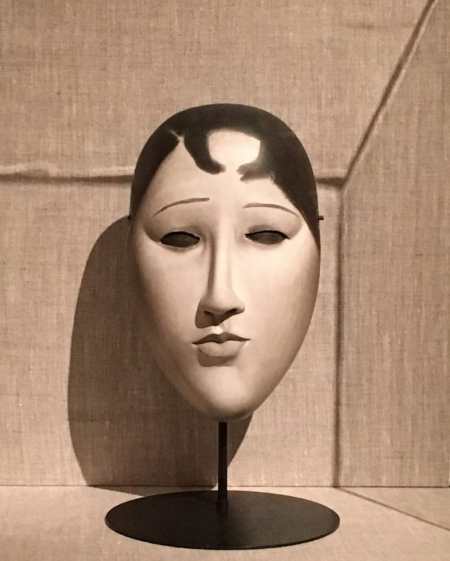
Ever since I was a little girl, I’ve had an uncanny ability to imitate other people. I could mirror what was said and done to me. I mimicked words I heard and actions I witnessed. I appeared normal, but there was a disconnect — my inside didn’t match my outside. After being around me for awhile, others would notice that my speaking, moving being didn’t have the same type of inner self as everyone else. I misunderstood, seemingly willfully, basic human communication. I knew none of the norms of social interaction. Inside this realistic shell, something essential was missing, or broken, or at best unrecognizable from what was inside everyone else.

I wasn’t like other kids my age, and they didn’t want to be around me. I lived in books, relating to every misfit I read about, who would come to some realization by the end of the novel and suddenly not be such a misfit any more. I waited for that realization to happen to me. I didn’t want to be a misfit, that odd, weird person no-one wanted to be friends with.

The realization never came.

By the time I was in high school, my peers actively disliked and avoided me. One girl said to me: “You always know how to say the exact wrong thing!” and stormed off in tears. I felt horrible, and horribly confused. Why had it been wrong? What was the right thing? I must be doing something wrong; no-one ever stayed friends with me for long. I grew stiff and shy in public.

I went to college in the early 90s when goth was still a subculture. I loved the music and dystopian outlook; they matched my negative inner monologue perfectly. They didn’t think I always said the wrong thing; they thought the world was full of hopeless fakes and that they themselves were just “being real.” Still, I was missing something. Women tried to be friends with me but I couldn’t see it. I thought they just felt sorry for me. I didn’t know what they wanted, or what they meant.

I never seemed to know what anyone meant.

It lasted a few years, but eventually those friends fell away, one by one, just like my friends always did. In my late twenties, I started working with animals as a veterinary nurse. While people were completely opaque to me, animals were an open book, so I thought work around them would help me feel more normal. It went well for a time; I was good with dogs and cats.

Unfortunately, working with animals still means working with people. Several months in, my supervisor pulled me outside. She said no-one wanted to work with me anymore. It was my attitude, she added, thinking she was being helpful. At a loss, I started to cry. What attitude? I didn’t think I was behaving any differently than anyone else. She told me to go home, pull myself together, and come back for my next shift in a couple of days.

I resolved to be better, and I was, for a few weeks, carefully curating everything I said to remain “positive.” But I couldn’t keep it up. I would get tired, my smile would disappear, and my normal behavior was off-putting. I left for another animal clinic.

And eight months later, another after that. One, I almost made it a year. The next, I didn’t last the summer. Something wasn’t working. Something about me was still wrong.

I buckled down. I had to get better at this people thing. I thought I was just lazy — other people were naturally sensitive to others, so why wasn’t I? I needed to apply myself. I started studying human behavior in new detail, and found another new group of friends, a loosely knit group of community theatre people. Examining them closely, I came to realize that people lied to each other, all the time. They pretended to be interested in other people, to be happy for them, to agree with them, even when they weren’t. They expressed sympathy for things they did not necessarily care about. They made a point of making other people around them feel good about themselves with a blatant disregard for reality.

I didn’t understand it, but I could imitate it. I did want other people to feel good about themselves around me. I became much, much better. But at a cost; it was exhausting. I couldn’t keep it up for very long, not enough for a forty hour work week, or, going back for a second bachelor’s degree, a full load of courses. But I found a job while I was at school, caring for animals in the animal research wing, where days would go by when I saw no-one at all. Just me and a few thousand mice. It was the only job I’d ever kept for more than a year. It was perfect. I loved it.

Two decades in, I had learned to assimilate. My classmates were friendly with me and enjoyed my company despite the near twenty-year age difference. It took me five years, but I graduated with honors.

Then I started a research-based graduate program. Looking back, I can see I had no business there, but it was competitive and I was flattered to have been selected even though I was not suited to it at all. The social aspect was not a problem, as graduate students are too busy to socialize. But I foundered under the deluge of work and demands.

The autonomy immobilized me. I couldn’t put an experiment together from start to finish, never mind a slate of them to test a theory. I had zero facility in the lab and was quickly outstripped by other new students who’d been working in them for years. I tried to get my student mentor to tell me what to do and he finally said, more gently than he probably wanted to, that this was graduate school and I needed to figure these things out for myself.

My classes were worse. The volume of information was many times greater than it had been in undergrad. I couldn’t learn all of the information, couldn’t figure what I was supposed to learn, and couldn’t understand what was being asked of me. My first exam came back and I had the lowest grade in the class.

I went to see the professor, who said, “I didn’t understand your exam at all. You didn’t answer the questions I asked.”

My other courses were no better and in the lab I had only produced one piece of usable data over the entire semester. Three weeks before finals, I underwent a battery of psychological tests, desperate for some explanation as to what was wrong with me.

One week later, I had a diagnosis. Autism Spectrum Disorder Level I, a high-functioning cohort of autism also called Asperger’s syndrome.

No-one has any idea whatsoever that I am a faker, a sham, a walking performance piece entitled “Socially Habituated Human.”

Up to that point, my life had been a hopeless tangle of failures, frustrations, and misunderstandings. It now settled into place like blocks in a preschool puzzle. It’s not my fault. I kept thinking. It’s not my fault. I did the best I could.

I was relieved. And so, so angry. How had it been missed? How many therapists, doctors, educators, had simply diagnosed me with depression, told my parents I was just bright, bored in my classes, that some children had difficulty fitting in, that I was otherwise normal?

Normal? I was anything but normal.

I had been trying — and failing — to force my autistic brain to work like a neurotypical (non-autistic) one my whole life and no-one noticed. I had struggled invisibly for decades. All my problems had been laid at my own feet. I had been berated for being rude, not paying attention, not concentrating, not trying hard enough. None of those things were true, but a lifetime of accusations had shredded my sense of well-being. Not only was I autistic, but I was horribly anxious and depressed, overwhelmed by the hopelessness of it all.

No-one could ever tell I had autism. Not even my graduate advisor, who figured I just couldn’t hack it and pushed me aside. I dropped out after one semester. To this day, he does not know.

My acting, ironically, was now flawless. No-one withdrew from me any more. The woman who had administered my psychological exam wrote that I was “warm and easy to establish a rapport with” (something no-one had ever said about me before that day). My few friends adored me. No-one had — has — any idea whatsoever that I am a faker, a sham, a walking performance piece entitled “Socially Habituated Human.” Or that maintaining such a performance requires an immense expense of mental energy and is still, to this day, extremely taxing.

I am back working with animals, again, but outside of work I have little energy left for socialization with friends. Going to dinner with a group is impossible; there are too many people to try to interact with at once and I can’t focus on the right ones at the right times. I can’t stay at a party for more than an hour, and I am zombie by the time I leave. But I can’t turn the performance off to anymore even if I wanted to. It’s now a permanent part of my demeanor.

I’ve wondered if it might be a protective mechanism, to shield me from the mistreatment I suffered growing up. I’ve wondered if I’ve somehow pushed my brain to make new connections that it wasn’t designed to make. Whatever the reason, as soon as I’m around another person, I turn on the character as though triggered by motion sensor. The smile. The greeting. The interest in his day, asking after her son, their weekend plans. I can’t not do it. Unless I am alone.

And so I have to live alone. I can’t do this at home, too. My only roommates are pets, cats, and they are perfect; quiet, accepting creatures, content to curl up next to me and doze or groom themselves while I write or watch TV.

I know my limits. I have become that odd person I had so fervently wished not to be as a child. I joke with my co-workers about my absent-mindedness, my routines, my need for repetitive activities. Everyone knows about me and my sunflower seeds. Wait — are you eating the shell, too?

My friends know that when we go out to dinner, I have to sit with my back to the TV so I can pay attention to the conversation. My niece knows, too.

“Your aunt has a lot of little things she needs,” I said to her once.

The thirteen-year-old rolled her eyes and sighed. “I know.”

I have good friends and relationships now, but it makes me sad that I am consigned to walk around in the perpetual state of being a very good guesser. I never did learn to read people. Close friends and my family I have been able to study, the way I studied chemistry or history. I have learned what their specific tones of voice mean, and the indications that underlie subtle changes in their facial expressions and postures. But I can’t gather that much information on everyone I meet. I just have to rely on what I think is most likely appropriate in a given situation, toss it out while appearing as sincere as possible, and hope for the best.

And what frustrates me more than anything is that no-one has any idea this is going on. If I do make a mistake here or there, people are too polite to mention it. But at work I’m always playing catch-up. Workplace politics are completely beyond me. Even though I have been open with them about my autism, they don’t see it, and don’t register what they can’t see. I am held to the same standards as a neurotypical person, with the same consequences if I mess up.

No-one sees the constant mental calculations in everything I say and do, the effort I expend to stay in the here and now, to always respond in an acceptable way. I can’t allow my mind to wander, ever, unless I am alone.

I am only truly at peace when I’m alone. I don’t have to perform for my pets.

Or my patients. It’s nice, just me and someone’s beloved dog or cat, in those brief moments when I’m waiting for another nurse to finish her task so we can take an x-ray or take out sutures or some such. It’s the best part of my day. I sit next to him, hold him close, bury my face in his fur and tell him it’s going to be OK. And sometimes, I’ll feel him relax a little and lean against me while I rub his coat. For once, I am with another creature, just as myself, and we understand each other perfectly.

Edited for clarity January 4, 2025
Posted in Book Two - Mind, Setting 1 | Tagged , , , , , , , | 10 Comments

effortless

“Do you think maybe the reason people don’t respond to you is how you talk to them?”

I’m doing a really good job of controlling myself right now. I’m sitting with one of my supervisors (my department has two of them because it’s too much work for one person) and our human resources administrator, and trying to explain in unemotional, but not accusatory, terms why I lost my temper on the treatment floor a week and a half ago.

That I was frustrated. That my extremely valid concerns about the fact that the way instruments were being packaged and sterilized in the instrument person’s absence was so subpar that it was interfering with my ability to perform my own job, and that despite the fact that I was one of the only people trained in it, I was not permitted to do it and had to spend hours fixing the mistakes of untrained people at the expense of doing my own job. That I had expressed these concerns continuously and been ignored.

“Listen, I can’t hear how I sound,” I answered. “I do my best to mimic someone who is honestly trying to be helpful rather than hector-y, but as to whether or not I’ve succeeded, I simply can’t tell. This is one of the features of my Asperger’s. It’s something I can’t control.”

The administrator stepped in, mindful as ever of the company’s adherence to the Americans with Disabilities Act. “What can we do to help you?”

You can tell people to stop being so goddamned sensitive and suck it up.

“I would actually really appreciate a little more tolerance. Not everything is a personal attack, you know? I’ve had to be trained by people here who don’t care about their own tone of voice and I just let it go. I thought that’s how things were.”

My supervisor picked up the thread, “Well, that’s not how things are here. If someone says something to you and you feel like it’s insensitive, you need to tell us.”

I am completely incredulous. “Really? Every little thing?”

She replied in the affirmative.

“Um,” I took a moment to figure out how to express my skepticism without being insulting. It always takes a moment. I’ve learned that if I don’t take that moment, people don’t think autism, they think asshole.

“That’s not been my experience,” I decided. “I guess maybe this isn’t the norm? But the places I’ve worked have all had more of a ‘suck it up’ mentality.” As in, grow the f*** up, it’s not always about you, something that has been expressed to me many times, by many people, throughout my adult life.

My supervisor continued, “If someone is speaking to you in a manner that is insulting or hurtful, you need to say something about it to me or [the other supervisor].”

There was no disguising the disbelief in my voice; even I could hear it. “Seriously?”

My mind kept going back to being in surgeries with doctors losing their tempers and throwing instruments around. Or the fact that one of my co-workers has no bones about ripping someone down to size, has done it several times since I started working there, and has never been sentenced to any sort of probationary days off. Meanwhile, I threw a stethoscope – into a corner, away from my co-workers – in a meltdown once and got a disciplinary write-up that went in my permanent record.

So, to say I’m withholding judgment on this fact would be, um, kind of an understatement, in the classical neurotypical way of being vague and ambiguous that continues to catch me off guard.

I hadn’t meant to bring up my recent exhaustion, but it seemed like a good opportunity, so even though it was off-topic – a BIG no-no for neurotypicals, I felt I had to at least plant a flag that might be recognized later.

“So, “ I said reluctantly, “I wasn’t going to bring this up, but the new job and hours I’m doing have left me completely drained. I was going to give it 12 weeks – it’s been 10 – but I just haven’t adjusted. I don’t have any energy at all when I leave here. I haven’t been able to do anything other than work and sleep. So that mental exhaustion may have contributed to me not being able to control my temper as well as I might otherwise.”

Silence. Dumbfounded stares. Clearly, I had just wandered into another critical error.

But it was the truth. When I was hired, I worked Tuesday – Friday, 10 hour shifts, with a three-day weekend. I did appointments two days and was a surgical assistant two days. It was a nice balance, two days exposure to the animals in the exam rooms and two days in a receptive environment to my sensory processing challenges in the operating rooms. It was perfect.

Then one surgeon retired and the others changed their schedules. All of a sudden, there was no need for me to do appointments on Wednesdays. Worse, if I were to work Mondays, it would have to be something that fell under the deceptive title of “patient care,” which was surgical admissions, hourly in-house patient treatments, radiographs and blood work for the appointments that needed them, invoicing, and discharges. It necessitated a level of multi-tasking and executive function that I, frankly, do not and will not ever possess. When first offered to me, I balked, terrified.

However, I was later informed that my bosses had been dismayed (let’s not say non-plussed, even though I’m pretty sure that would be more accurate) by my lack of interest in “helping the team.” So I went back a few weeks later and offered to train for it, try it out, see how I did.

And, as should have been expected, I am terrible at it. I just keep forgetting things. I’ve been doing it for over two months and my skill level has barely exceeded that of trainee. Plus, by about the 8-hour mark, I’m completely mentally tapped. I feel like my brain has gone through a wood chipper. I’m a zombie, barely able to complete even the simplest of tasks.

Worse, I’ve lost my three-day weekend. I’m on for two days, off for one in the middle of the week, and back on for another two. My sleep schedule is in tatters. Even though I’m getting 9 hours of sleep a night, I now have to wake up at different times on different days and I’m a mess. I am slipping into dangerous mental fatigue territory, and pretty soon, I may start having to take days off. Something has to change.

And I am wandering into the minefield of self-justified anger. This isn’t the job I applied for, isn’t the job I was hired for, and not only do I suck at it, but even my underwhelming level of competency leaves me with an overwhelming loss of mental energy. I used to look forward to going to work. Now I don’t want to get out of bed. My friends insist that I need to say something about it. I’m afraid of offering ultimatums.

I don’t know what to do. I desperately wish I weren’t autistic and could just slide into the new position with the same ease that anyone else of my apparent intelligence could. And my unfairness button, always on a bit of a hair trigger, got activated, too.  None of the other assistants had to change their positions, or schedules, or days. They all got to keep their three-day weekends.

Today is my day off. I don’t want to work tomorrow. I need the sleep.

Actually, what I need, more than anything, is for someone else there to understand what it’s like inside my head, inside the head of an autistic person. All of the effort I have to expend to perform at even this mediocre level. How hard this is on me, how demoralizing, to feel like this, to try as hard as I can and still come up short, putting in all of the effort I can and still failing in all the ways that matter, failing to control my emotions, failing to get better at this job, failing to  see where the boundaries are to keep from crossing them, failing to bear up under the mental stress of feeling like a failure all the time.

Inside, I can feel the cracks starting to form. I don’t know where my breakpoint is, exactly (thank you, autism, for my substandard interoception), but I know I’m getting close. And my friends are right; I need to say something to someone before I have a classic, full-blown meltdown at work because I can’t find a sharpie or something.

But what do I say? And who do I say it to? And what happens then?

Posted in Book Two - Mind, Setting 1 | Tagged , , , | Leave a comment

where god is

I have suddenly realized that somehow, somewhere, over the last however so many months, I have lost my faith. I used to center it in the altruism of humankind, the ability of my fellow creatures to reach outside themselves and do something for which there is no reward, other than the inner satisfaction that comes from being useful, being helpful, being needed. But I am now left feeling unfulfilled by that alone, that which is, for all intents and purposes, a mere mental construction, a sidestep taken to avoid confronting the persistent doubt that anything greater actually exists.

I have tried to find that something greater, grasping at the gods of different religions, trying to take hold of them, and yet unable to assimilate the gildings of humanity that entrap their ephemery – this god, this belief, this way. It makes no sense to me, my autistic brain insisting on the purity of a definition: that if it is god, then it must need none of those things. Humans need those things; gods don’t.

And how to ascribe to some unknowable force that which science readily explains? What’s learned cannot be unlearned. When understanding is best reached through critical exploration, double-blinded study, tissue- and cellular-level examination of life, sub-atomic dissection of matter, how to imagine anything beyond those extraordinary boundaries, those laws, so painstakingly acquired? I do not see god in churches, chapels, temples, nor under microscopes or in equations or in heavenly [sic] bodies, all of which are entirely describable within the parameters outlined above. There is a scientific underpinning for virtually everything. There is too little of what there isn’t to justify the existence of some all-powerful force with its hands on the levers. God didn’t take my shoulder pain away. A surgeon did that. God didn’t cure my insomnia. Medications alleviated it. (And imperfectly, I might add, on both counts.) God didn’t almost take Momma Ape from us last summer. Medical, scientific, human mistakes did that.

I can explain almost everything around me with science. What little I cannot, I am able to attribute to a depth of scientific knowledge as yet unplumbed. Where is there room for a god in that?

And yet I ache, inside. I am terrified of being spiritually alone. It crushes me to think that once the body I inhabit disappears, I, all of my thoughts, all of my personality traits, the way I smile, the way I write, the way I move (all more or less within the scope of modern genetics, of course), will disappear with me, just vanish, as though they never were. For what are they, anyway? Are they truly nothing, little bits of information, meaningless when taken apart, their very coherence the product of a mind biologically predisposed to assume the presence of a higher power with absolutely zero hard evidence as to its existence?

Was there more god in ancient times? Or simply less science? If we cannot explain it, it must be god, yes? Originally, some cultures assumed god was female, since females were the producers of life, back when males were not thought to be an essential component. Because they just didn’t know. People thought gods changed the phases of the moon, brought sun and storms, health and disease, made crops flower, animals come and go, seasons cycle past, all because they had no other explanation. And at every step, the more we learned, the narrower the scope became within which a higher power could work.

Certain humans and cultures fought to keep their god as science marched forward, fought to preserve a small corner of existence for a great unknown, claimed knowledge of an unknowable afterlife, clamoring for a piece of the mystical outside the reach of human influence. Now, even though we have yet to definitively understand how life as we know it began, scientists are so close that a guiding hand, or even a bare nudge, may soon become gratuitous to the explanation. And what then? What space will remain for god to inhabit? Coincidence? To think of a god reduced to scheming via luck, seems no god at all, just natural randomness that we choose to see patterns in, pattern-seeking creatures that we are. Creator? Not exactly.

But in complaining of this to a close friend a few night s ago, he responded, “Well, how do you expect God to act? By sweeping down from above?”

Is it possible that I have missed something? Is it possible that god is in everything, and that our understanding of it and the world is parceled out to us as such because it is the only way our minds can envelop it? Not because there isn’t more out there, but because the limits of our mental capacity bar us from comprehending it? That we cling to science because we need a world with rules, because a world governed by spirituality alone doesn’t make sense? That whatever god-thing there is is careful not to reveal itself, to act only in ways we can explain away, to hide in plain sight, to be everywhere and nowhere at once, for our benefit? For what would happen if we did suddenly discover that all of these laws of physics and chemistry and biology could be overturned at the whim of some all-powerful consciousness? What anarchy might descend if the rules no longer held, if god suddenly was everywhere?

There are certain, inexplicable outcomes that scientists refer to as “jealous phenomena”. These are happenings, turns of events, strange abilities that wither under the light of scientific inquiry, and yet seem to exist nonetheless; a cat that can tell when people are about to die; a child who knows when a beloved uncle has passed hundreds of miles away because he visits her in her bedroom doorway, a woman who can hear animals’ thoughts. In the same way that observing certain subatomic particles freezes them, changes them, as soon as we try to get a hold of otherwise inexplicable happenings, they vanish. Is this itself god, hiding from us, knowing that we simply cannot absorb the unadulterated entropy of a frameless existence, outside the time-linear, three-dimensional, physical world we comfortably inhabit?

Perhaps science, luck, coincidence, is god’s way of protecting us from the full havoc of its being. Perhaps it works through our physical laws not because it needs to, but because we need it to.

And it has been there all this time and I just didn’t see it?

More important, can I see it now?

Posted in Book Two - Mind, Setting 1 | Tagged , , , , , , | Leave a comment

book two – mind

It seems that fate has deemed that I did not get a thorough enough education in invisible disability from my chronic pain.  Since that has been reduced to the category of problematic, rather than life-altering, a new demon has arisen to take its place.

In December of 2015, I discovered I was a high-functioning autistic.  I had assumed that being armed and open with this knowledge would be more than enough to forestall any future difficulties with it.

I was incorrect.

Welcome to Book Two:  “mind”


Posted in Book Two - Mind, Setting 1 | Tagged , , , | Leave a comment

can’t

What does it mean when you say you “can’t” do something? Sometimes it is literal – I literally can’t do a handstand. But often it is more subtle, meant to impress a sort of finality despite the lack of a literal barrier, an underhanded implication that we would, under other circumstances, but for reasons we wish to assert are beyond our control, we can’t.

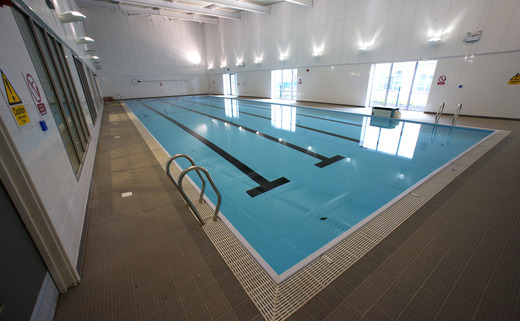
As for me, right now, I can’t swim.

Except I can swim. Adeptly. Swimming isn’t like running, a sport anyone can take up at anytime via purchase of a pair of running shoes and a personal commitment. No-one has to to teach you how to run. But you have to be taught how to swim, even if the teacher is yourself. Swimming with any kind of efficiency generally requires a teacher other than yourself, along with adoption of a small parcel of other skills like remaining horizontally afloat and learning to breathe while moving through water. There’s a hump to be gotten over for starting regular swimming, a higher boost of activation energy to go from 0 to 1 than there is for running. I like that about swimming, even though I am able to through no personal perseverance of my own, and would do it whether or not that were the case.

Like me, many adult swimmers learned to swim when they were kids, something deemed important by their parents, such as learning to ride a bike or drive a manual transmission – not absolutely necessary for survival, but a useful skill nonetheless. Some tenacious individuals took it up as adults for their health or because they simply wanted to.

I know there was a time in my life when I couldn’t swim, when I was afraid to put my head under the water, but I don’t really remember it. For all I know, I love to swim, and always have. I love the water and I love being in the water. As ungraceful as I am on land, my frequent forgetting of where my hands and feet are, my persistent inability to improve my hand-eye coordination, none of that matters in the water. In the water, I am graceful, powerful, knowledgeable. I’ll swim just about anywhere. The ocean is my preference but I’ll take whatever you’ve got, as long as someone says it’s safe (and perhaps even if someone says it’s not).

But every time I swim, now, my shoulder pain rockets from a 3 to a 9 within 48 hours. The cause-and-effect pattern has been established. So right now, I can’t swim.

I had said I would do whatever it took to keep from being in that kind of pain again. And I hate all the drugs, the time and money wasted on pointless physical therapy, the injections, the roller coaster of hope and disappointment. I mean it when I declare I’d do anything to get a pass from that horror show.

But what if it means I can’t swim?

I mean, that’s the logical end to this thought exercise, isn’t it? What do I want? To not be in pain. What causes my pain? Swimming. Well, it seems pretty simple, doesn’t it?

But I love to swim. Am I willing to never swim again in order to not be in pain? How is it that I’ve found myself in this place, where I have to sacrifice a cherished activity, something generally considered good for one’s health, in order to be well? I don’t want to say I can’t swim. I don’t want to not be able to swim. But I have this fear, and it’s strong, about swimming, and about pain.

I mean, I can swim, if I want to deal with debilitating pain for several days afterward. I suppose I should try to arrange for some diagnostics to “catch” whatever the swimming is doing in the act – set up an MRI or something and then do a swim workout the day before and see what it sees – if it sees anything. Which it probably won’t. But maybe I should ask. Because it’s the only hope I have now, I suppose, of figuring out why it is that I shouldn’t – can’t – swim.

Because right now I can’t. I can’t swim. I am unable to, not because I don’t know how, not because I wouldn’t rather, but because of other circumstances which prevent it, without which I’d probably be in the pool right this very second.

So, I can’t.

Posted in loose leaves | Tagged , , , , | Leave a comment

wilderness

“Carpal tunnel” What?

“There is nothing wrong with your ulnar nerve.” The neurologist spoke in the soft, mixed British-Asian accent of highly educated students from that part of the world. “It is all median nerve. Carpal tunnel.”

Never mind that distal fourth and fifth digit numbness in both hands cannot possibly be explained by carpal tunnel. If the doctor says carpal tunnel, you get treated for carpal tunnel.

So I went to a new pain doctor, and he gave me an injection in my right wrist for carpal tunnel, which was decidedly less fun than many of my other injections, particularly the part where he digs around with the needle to inject the numbing medication, while telling me to “let him know” when he hit the median nerve. Which he did. Often.

And sure enough, the excruciating burning and pins and needles in that hand disappeared. And sure enough, I still have zero sensation in the tips of my ring and pinky fingers, and slightly above zero in the tips of my other fingers. But I have to admit, this is not going to keep from working the way the loss of tactile sensation and excruciating pain in my hands did. So I suppose I should just shut up and be grateful and get used to it.

And I am. Getting used to it. I am somehow still managing to learn new modes of fine motor coordination without the level of direct feedback I once had. My hands are improving, in surgeries. I am able to adjust retractors to hold them steady in real time by compensating for the slight, uncontrollable movements of my hands. And certainly, that is all the surgeons care about. They just don’t want things to move, and whether I have been holding them for twenty seconds or twenty minutes is of no import to them whatsoever.

I also received a cortisone injection under each shoulder. Unfortunately, the one on the right didn’t work. I have not tried to swim since the last flare-up. But according to the new pain doctor, and tentatively confirmed by my shoulder surgeon (who apparently has a thing for me, but that is a thing for another post), the bursitis that was removed back in January of 2015 is likely reforming in that same area, and the cortisone can’t do anything about that. This new pain doctor, bless his heart, apparently unaware of my previous trip down this road, suggested nerve blocks and nerve ablations.

Anyone who has read Book One is probably a little confused. After all, wasn’t the ultimate goal of that January surgery to remove the part of my shoulder blade that caused the first bursitis so it wouldn’t come back? So why is it back?

To be fair, it isn’t bad, yet. But unless I never want to swim again – and despite four months of physical therapy to engage the “correct” muscles when using my shoulders while swimming – it will continue to worsen. A mere two years and change from the original surgery.

So back into the wilderness I go, that same vast jungle of medical unknown from which I thought I emerged last year. Distal digital numbness? No known cause. Re-emergence of the bursitis? Ditto.

If nothing else, we have been able to clarify swimming as a direct causal factor to the pain and tissue derangement under my right scapula, having first sent me back to the surgeon after swimming in the ocean in August, and then each time following a swim workout since. Troublingly, each time, the pain has rescinded just a little bit less.

But why? I want to know why. What the hell is it that I do when I swim that aggravates that area? I don’t just want to throw treatment after treatment at it, or more random physical therapy (which may have very well exacerbated my carpal tunnel, yay) in which people with enough medical training to help with 99% of pain and weakness associated with anything from athletic to surgical injury are at a complete and total loss to explain why, despite the strengthening of the muscles they have pinpointed, I don’t get any better.

I’ve made significant postural and muscular changes to my upper body. My shoulders are aligned with my spine. The larger and smaller muscles underneath them have taken back the jobs they held before being rudely superseded by my traps. But it doesn’t seem to matter. I get into a pool and start swimming, just a crawl, the same stroke I’ve been performing, more or less the same way, since I was a child, and something goes awry.

And no-one knows what or how. A phalanx of medical professionals has come up totally empty. And even now, as I lean my head back to stretch my neck, I can feel that familiar, saw-blade edge rubbing under my scapula, just like before.

I went through all of this for more than just a reduction in pain, although that was the primary goal. I wanted to swim again. I said it to everyone. And everyone assured me there was “no reason” why I couldn’t get back to it. Time and again. No reason. It undoubtedly would have been more accurate to state, “no reason that I can think of.” Which means there could be many, many reasons, and they just don’t know what they are, and prefer to deliver the supposedly comforting fiction that they therefore must not exist. Which is not comforting, to me, at all.

Oh, I understand the motivation. I play the same games with myself, often forcing myself to deal with uncertainty by dwelling on best-case scenarios instead of worst-case ones, because it doesn’t affect my ability to handle the outcome and why spend time feeling like crap if things are going to be OK?

But not for this. No, no, no. Not my shoulder. I have already denied, confronted, raged against, settled with, and been released from the possibility that I might have permanent pain and disability there. I just don’t have it in me, looking back on the emotional horror of those harrowing two years, to wobble back and forth on that same razor’s edge once more for months on end while game new doctors venture into the wilderness with me to try to figure out what’s going on back there.

The pain persists, both the residual mental fallout and the shoulder itself. I want desperately to comfort myself, to get in the pool, to slip into that quiet, pale blue and let the cyclic motions of my body and breath relax my mind. And I don’t dare. And I feel that deep ache at the pit of my stomach growing with the pain in my shoulder. No-one can help me. That’s what I think. It’s over.

And nothing but trees and darkness, everywhere I look.

Posted in loose leaves | Tagged , , , | Leave a comment